Blog3 à 4 min.3/30/2026
AI as a prosthesis: an extension of ourselves, but who controls the (long) arm?
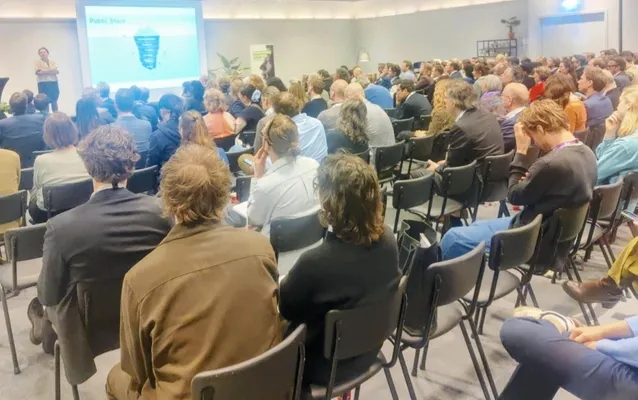
Humanity invented the wheel as an extension of our feet, tools for our hands, the microscope for our eyes, the radio for our ears, and recently, the computer as an aid for our brains. We can see these technological tools as prostheses: an extension of ourselves to compensate for a deficiency. This was one of the provocative insights shared by Hans Schnitzler during the seminar by the Dutch Data Protection Authority on autonomy in AI and algorithms, held on March 25, 2026, in Leiden.
In retrospect, we can summarise the theme of the congress as: How do we effectively use such a prosthesis without it becoming a long arm of Big Tech? The computer, and especially generative and agentic AI, is an incredibly powerful tool that can compensate for human “deficiencies” and enhance our skills. At Glazen Uil, despite our critical stance, we are enthusiastic about the many possibilities to work smarter with AI. But what is crucial in the metaphor of a prosthesis vs. AI: a regular prosthesis is autonomously controlled by the wearer, the wearer owns the prosthesis, and the wearer decides how and when to use the prosthesis.
And that’s the crux. Because most AI has now become a long arm of Big Tech, reaching into every living room and office. The digital prosthesis is usually no longer our own autonomous extension. Imagine: the entire country under the robotic control of Big Tech. Exaggerated? 100% of municipalities in the Netherlands are dependent on American Big Tech. And provinces, and even the Senate and House of Representatives. Also, the major Dutch newspapers and news broadcasters. All major banks. Housing corporations. Public transport. Emails from most hospitals… Source: Dashboard Digital Dependencies And in the corporate world, it’s not much different. Microsoft, Google, and Amazon AWS are the standard.
This is not surprising. Big Tech offers convenience, everything under one roof. And at Glazen Uil, we certainly won’t demand that organisations switch overnight. But with every new step in the IT landscape, you can ask yourself: is this important enough to retain autonomy? For business-critical data and AI, the answer is hopefully often “yes, if it can be done independently with comparable price, speed, and security, why not?” And spoiler alert: it can be done!
How do we prevent a Big Tech state and regain more autonomy in AI?
We notice that the media, politics, and the business world are mainly driven by FOMO: Fear of Missing Out. “We need to do something with AI now” and “we’re missing the boat!” We can tell you: Europe has already missed the boat. And we will miss many more boats. But let’s seize this moment to chart our own course. It’s time to build our own AI again, as prostheses that we can control ourselves, and with which we can make ourselves smarter and stronger. Prostheses that fit within a “new European techno-political narrative,” as Diederick van Wijk aptly described it in his lecture at the congress. A story where technology, politics, and our European values come together.
How do we approach this? First, we must prevent a revolving door between Big Tech and the government. In the US, an opaque and undemocratic entanglement has already emerged between Silicon Valley and the White House. Marleen Stikker warned in her keynote about the rise of such a “Big Tech state.” We must prevent the Netherlands from becoming such a Big Tech State too. That long arm must not grow any further. Trias politica, separation of powers, remember? There is no place for Big Tech lobbying and cronyism there.
Second, we must start building and delivering smart technology ourselves. Collaborating within the European Union, with the Netherlands leading the way. We have more than enough high-quality knowledge, smart people, and creativity .
From talk to action
During the congress, we noticed a lot of goodwill among governments and policymakers for this new European techno-political narrative. The Dutch Data Protection Authority, as the organiser, also clearly took a leading role. But given the limited capacity of the DPA, more is needed: working together, putting our shoulders to the wheel, and translating our wishes into action. And at Glazen Uil, we are happy to contribute!
How do you see the role of AI? Is it an extension of ourselves, or does it risk becoming an extension of Big Tech? Do you want an AI prosthesis that you can control yourself? Let us know via a comment on LinkedIn or send us an email.